
Tiles are widely used in homes, offices, and commercial buildings because they are strong, beautiful, and easy to clean. But how well the tiles stay in place depends a lot on what is used to fix them—especially in areas with changing weather conditions.
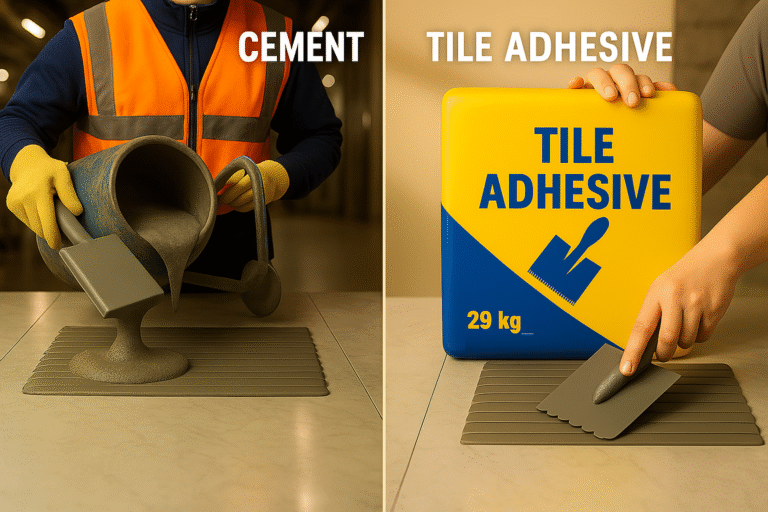
For many years, people used a cement and sand mixture to fix tiles. But today, modern tile adhesives are replacing cement in many projects. So, the big question is:
Is cement still a good choice for tile fixing when the weather keeps changing?
Let’s understand this in simple words.
What Is Cement and How Is It Used in Tile Fixing?
Cement is a commonly used building material made by combining limestone, clay, and several other natural minerals. When combined with water and sand, it forms a thick mixture called mortar, which solidifies as it sets. In traditional tile work, this mortar was used to stick tiles onto walls or floors.
For decades, people used this method in bathrooms, kitchens, and other areas. But today, we face more challenges in construction, especially with weather changes.
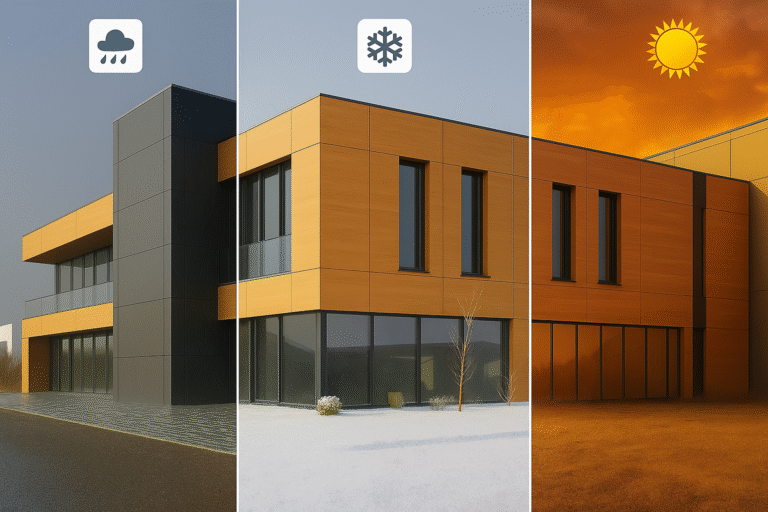
How Weather Affects Cement-Based Tile Work
Cement might seem strong—but it can face several problems in changing weather conditions, such as:
1. Expansion and Contraction
- When the weather is hot, cement expands.
- When it gets cold, cement contracts (shrinks).
- Repeated movement can eventually cause tiles to crack or detach.
2. Moisture Absorption
- Cement has a porous nature, allowing it to soak up moisture.
- In rainy or humid weather, it soaks up moisture.
- In dry weather, it releases moisture and turns fragile.
- These variations reduce the strength of the connection between the tile and the surface.
3. Low Flexibility
- Cement doesn’t handle surface movement well.
- If the ground or wall moves slightly (which can happen with temperature changes), cement may not adjust.
- Tiles may pop out or develop hollow sounds beneath them.
4. Longer Drying Time
- In cold or humid weather, cement takes longer to dry.
- If tiles are placed too early, it reduces the bond strength.
So, while cement is affordable and widely used, it may not be the best option in areas with extreme or frequent weather changes.
What Are Tile Adhesives?
Tile adhesives are modern bonding materials specially made to fix tiles. Most are cement-based powders mixed with special chemicals to improve performance.
They come ready to mix with water and are easy to apply using a notched trowel. Tile adhesives offer many advantages over traditional cement-sand mortar.
Why Tile Adhesive Is Better in Weather-Changing Areas
Here’s why tile adhesive is now considered a better choice than cement for tile fixing, especially in places with varying climates:
1. High Flexibility
Tile adhesives are made to be flexible. They can absorb small movements caused by expansion, contraction, or surface shift without cracking or losing grip.
2. Water-Resistant
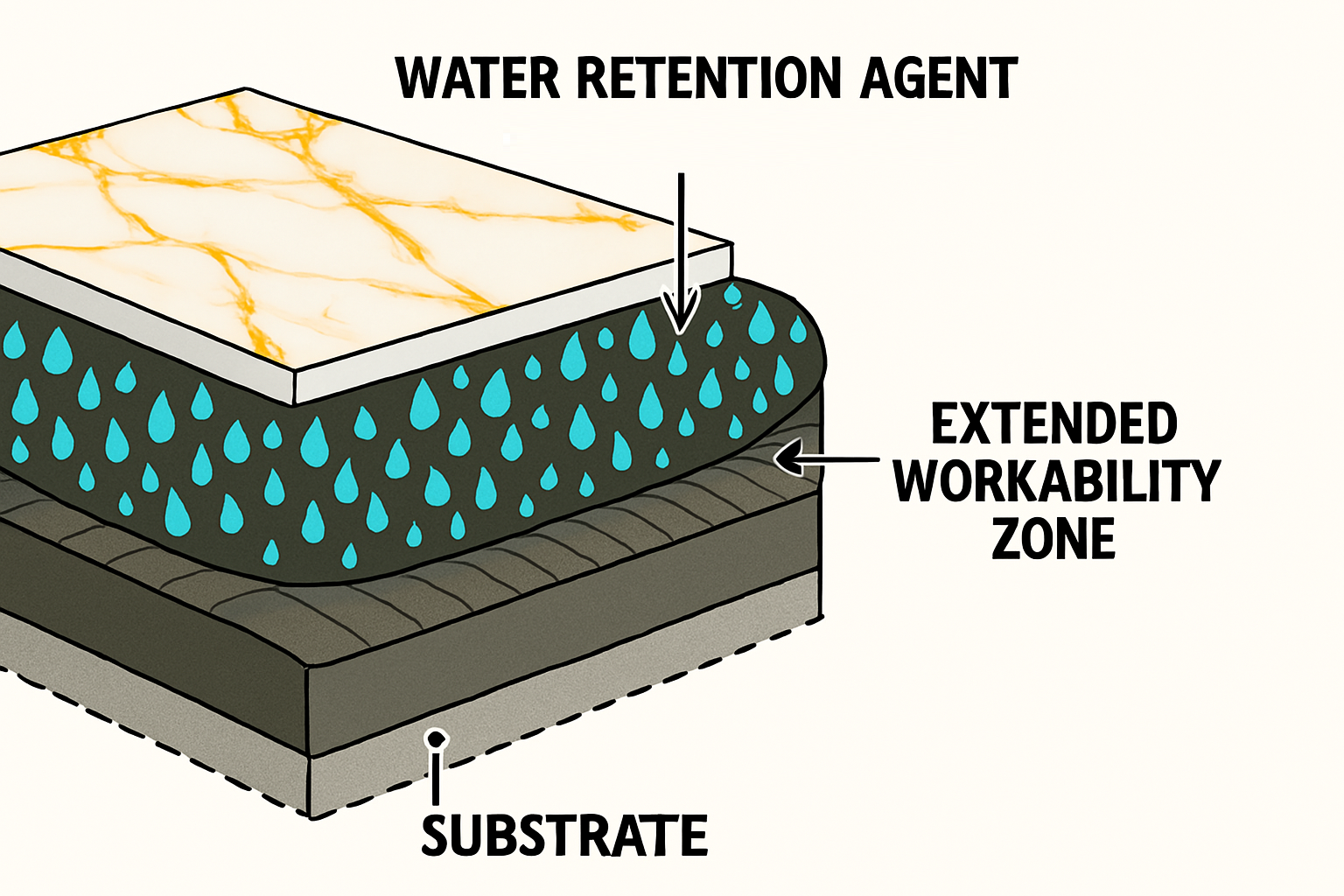
Good-quality tile adhesives are water-resistant or waterproof. They don’t absorb moisture like plain cement, making them ideal for wet areas, outdoor walls, terraces, or swimming pools.
3. Strong Bonding
They offer better adhesion strength, which means the tile sticks more firmly to the surface—even under tough conditions like heat, cold, or humidity.
4. Even Tile Surface
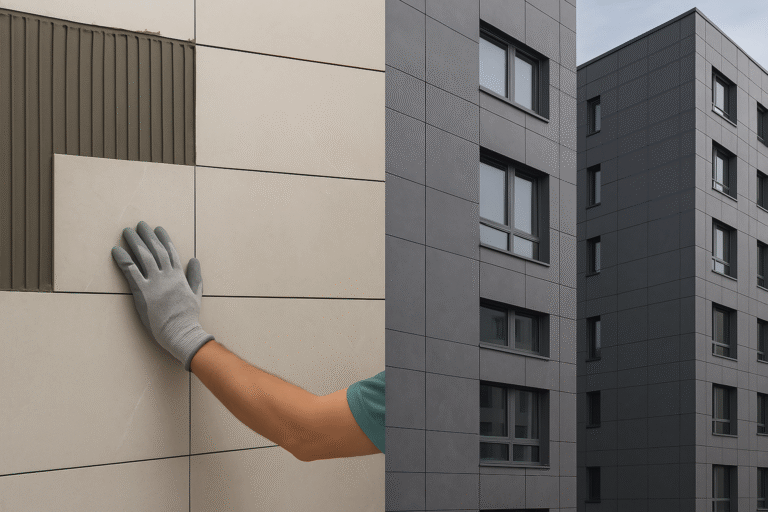
Using adhesive results in an even and consistent surface under the tile. This avoids hollow spots and makes tile surfaces look smoother and more professional.
5. Faster Work and Less Wastage
Tile adhesives are easy to apply, require less material, and reduce installation time. This is a big benefit in modern construction projects.
Real-Life Example
Let’s say you live in a place with heavy rain in monsoon, hot summers, and cold winters. If you fix tiles using only cement and sand, you might notice problems after one or two seasons:
- Tiles may lift or crack.
- Water may seep into the gaps.
- Surface becomes uneven or slippery.
But if you use a weather-resistant tile adhesive, it can handle all these changes better and last longer without repairs.
When Can Cement Still Be Used?
Cement can still be used in some cases:
- For basic or low-cost installations.
- In areas with stable temperature and dry weather.
- For non-critical spaces, like sidewalks or internal base layers.
But for long-term durability, especially in weather-prone areas, tile adhesive is the smarter option.
Conclusion
So, is cement a good choice for tile fixing in areas with weather changes?
The honest answer is no—not always.
While cement was once the go-to method, it simply can’t handle modern challenges like moisture, temperature swings, and surface movement as well as modern tile adhesives can.
If you want your tiles to stay strong, look great, and last long—especially in changing climates—then choose tile adhesives.
They’re designed for today’s world, where strength, flexibility, and quality matter more than ever.